



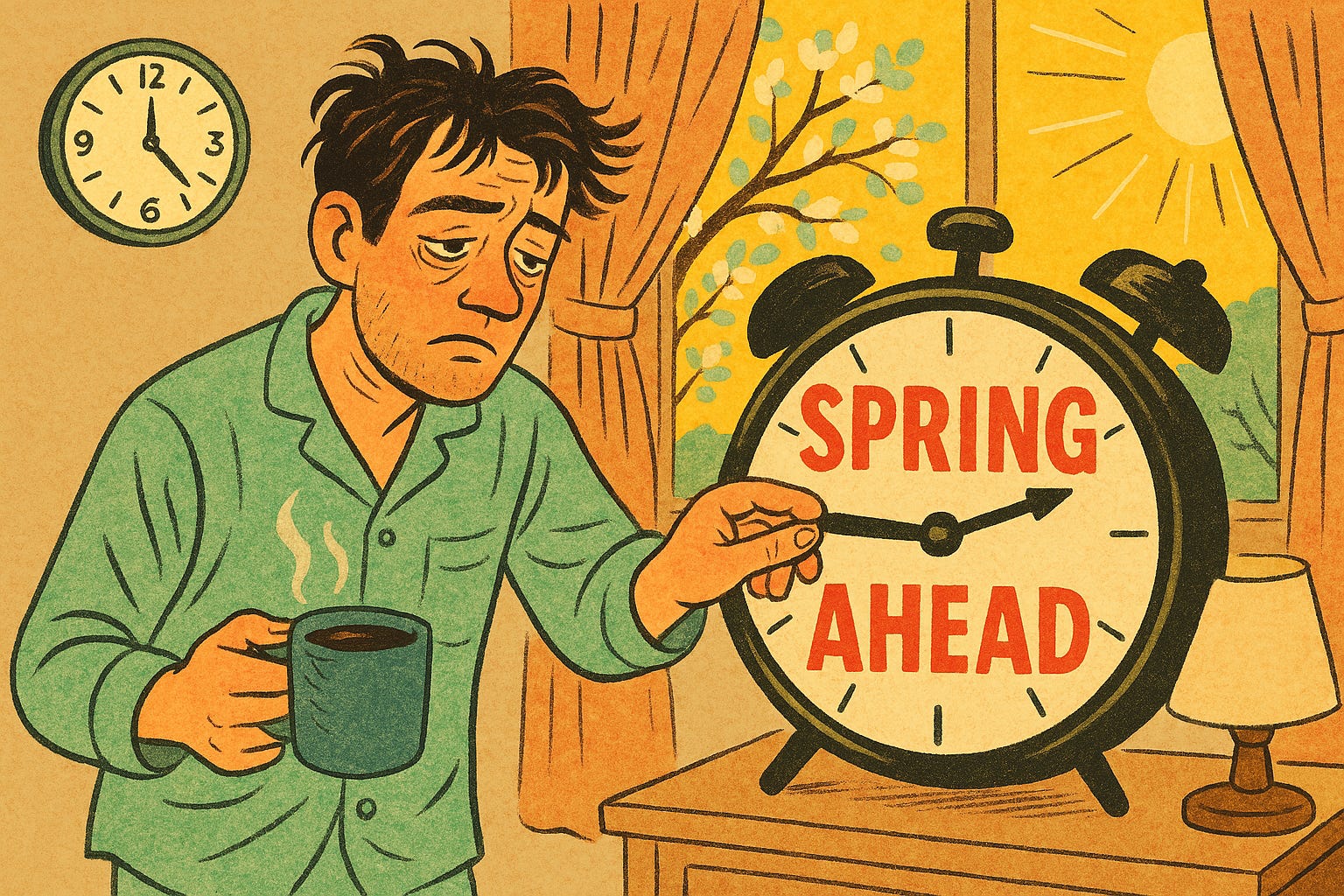
When we “spring ahead,” we don’t just lose an hour on the clock; we disrupt the internal rhythm that governs sleep, stress, mood, and recovery.
Research shows measurable increases in heart attacks, strokes, vehicle crashes, and workplace injuries in the days following the daylight saving time shift. For first responders and anyone living under chronic stress, that one-hour change can hit harder than expected - especially as we age.
In this episode, Roy breaks down:
• What daylight saving time actually does to your nervous system
• Why sleep disruption costs more in your 40s and 50s than it did in your 20s
• The “Shift Before the Shift” strategy
• The 72-hour protection plan
• “Revenge bedtime procrastination,” and how to reclaim autonomy without sabotaging recovery
• How to train smart when you’re under-slept
• A simple 3-step protocol to guard your mindset at work and at home
Sleep isn’t optional — it’s operational.
If you’re serious about aging with strength, resilience, and purpose, this episode gives you a practical, evidence-informed plan to manage the time change instead of just powering through it.
Where to Contact Roy
Instagram: @roysmalley.us
Facebook: @roysmalley.us
LinkedIn: Roy Smalley
All my links in one place: www.roysmalley.us
If today’s episode resonated with you, subscribe to The Aging Well Firefighter on your favorite podcast platform.
Join the community of first responders, families, and friends learning how to stay sharp in body, mind, and purpose for the long haul.
Rate, review, and share the show to help other frontline professionals - and the communities we serve - fight wisely and age bravely.


