


I’m hearing more and more complaints about gas prices lately, which isn’t exactly surprising - Americans have been complaining about the price of gasoline for as long as I can remember. But to be fair, gasoline is far more expensive now than when I first got my license (it was under a dollar back then). And most of us don’t buy gas because it’s fun – we buy it because we need it to get to work. For firefighters, EMTs, nurses, cops, dispatchers, and anyone else who can’t work from the sofa through a laptop screen, fuel is not optional. So when the price at the pump goes up, it stings.
But some simple math can give us a little perspective: a standard 16-ounce can of Monster Energy costs about three bucks. At 128 ounces to a gallon, pricing Monster the way we price gasoline makes it about twenty-four dollars per gallon.
Twenty-four dollars. Comparatively, the price of gas doesn’t look so bad.
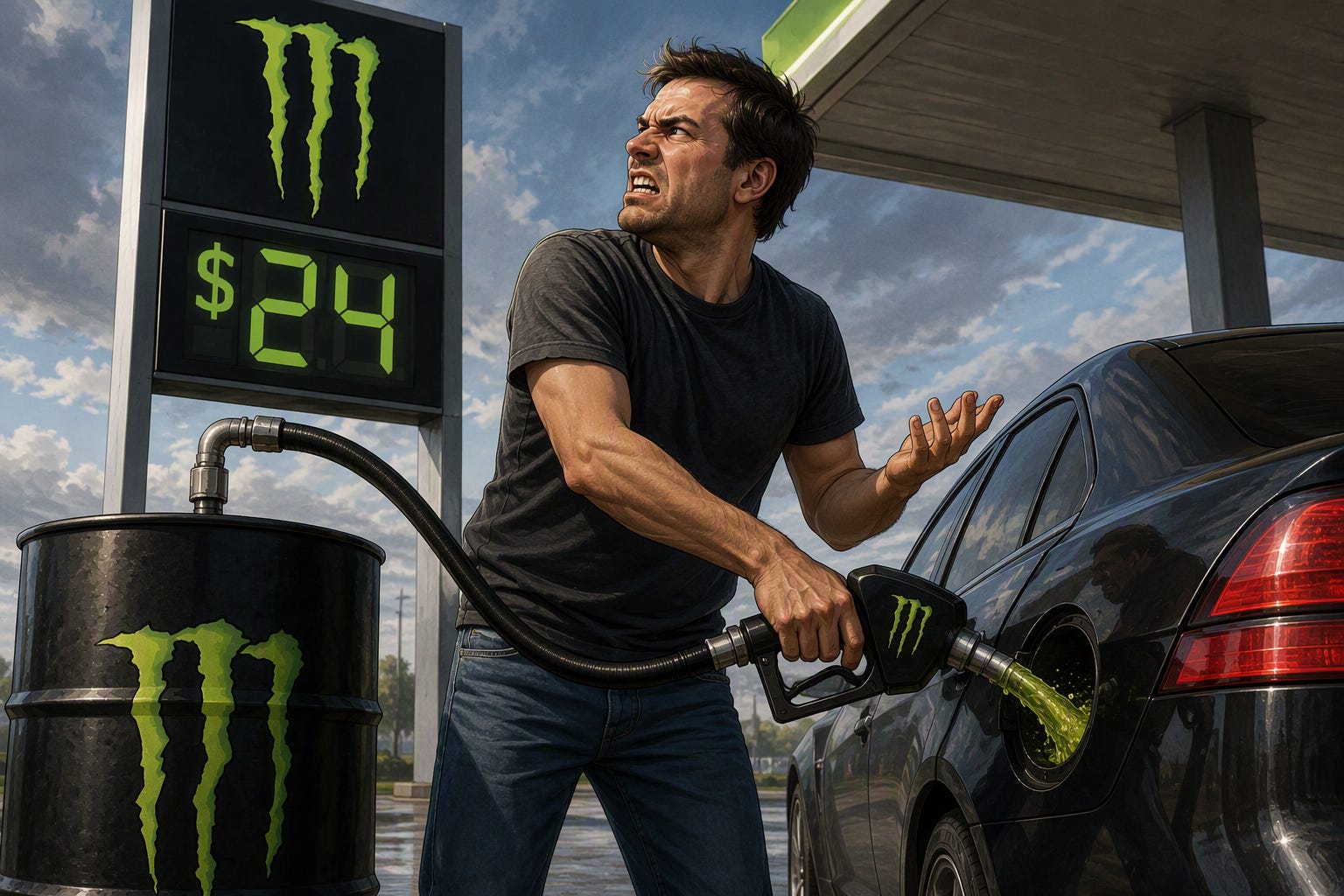
Now, I’m not harshing on energy drinks. I’ve been in fire and EMS long enough to know that making it through the day occasionally requires a little liquid sleep replacer. But I bring up the Monster vs. gasoline comparison to show that our feelings about money can change depending on whether we choose to spend it, or whether we’re forced to. Insurance premiums, utility bills, or gasoline each feel heavy because they’re tied to necessity – we have to get them, even if we’d rather spend that money somewhere else. A vacation, a night out on the town, or your Monster don’t have the same emotional sting because they’re tied to choices – comfort or reward or enjoyment.
It’s something behavioral economists call “mental accounting,” and I see it in health and fitness all the time. Many people will admit they need to lose weight or reduce stress or get their “numbers” under control, and know that improving their fitness can improve their health and quality of life.
But paying for an exercise class, personal training, or a gym membership? That’s too expensive. It doesn’t work with their schedule. They need to think about it or check with their spouse. Meanwhile, the dinner out and drinks they have a few times per week may cost far more. After seeing this same pattern play out time and again for more than 15 years, I eventually learned to not take it personally. Because it’s not about me, it’s about simple human psychology: dinner offers pleasure now while fitness often requires discomfort now in exchange for benefits later.
For human beings, who are wired to prefer immediate gratification, that can be a tough trade.
But this article isn’t really about gasoline or energy drinks or personal finance or fitness motivation. It’s about how the same pattern that shows up at the gas pump and in the gym also shows up in public safety.
Communities usually say they value their first responders, and I believe most individuals genuinely do. But what communities actually value becomes much more evident during the budget process.
In many places, especially rural and smaller communities, fire and EMS coverage still depend heavily on volunteer or mostly volunteer staffing. In Wisconsin, more than half of EMS agencies rely on all-volunteer or mostly volunteer staffing, and nearly 80 percent of fire agencies rely on all-volunteer staffing. The system depends largely on people who are expected to provide professional-level service under increasing scrutiny, often with limited pay (or none at all).
Volunteer first responders across the state and across the country have built departments from the ground up, paid for their own training, and organized fundraisers to cover department operating costs. In fact, many communities have survived for generations because volunteers gave far more - financially and emotionally - than anyone had a right to expect.
For a long time, the volunteer model functioned in many places because most people worked in the community where they lived, and most employers could afford to let someone leave when the pager went off. Call volumes, training requirements, and clinical scope were lower. But as the “all-hazards response” nature of the emergency services has continued to expand, today’s volunteer fire and EMS agencies are now expected to handle far more. And as the workload has increased, so have public expectations.
The volunteer model is struggling. But it’s not because volunteers stopped caring – it’s because the goalposts keep moving.
A community may believe it is saving money by avoiding the cost of part-time or full-time staffing, but those savings are only real if the level of service remains adequate and sustainable.
This is the public safety version of being penny wise and pound foolish. A person may resist investing in fitness coaching or an exercise class because the price feels heavy, only to pay later through worsening health or reduced quality of life. And a community may resist investing in emergency staffing because the budget number feels heavy, only to pay later through delayed or missed responses and burned-out members.
Emergency services are not something a community can purchase “on demand.” You cannot wait until your house is on fire or you’re having a heart attack to decide whether staffing matters and training time was worth funding. Public safety must be built in advance, or it is not built at all.
That is part of what makes this politically difficult. Communities often value the idea of emergency services more easily than the operational reality of emergency services. They value school safety talks and freshly washed trucks at the annual parade and responders who show up 24/7/365. But when the conversation shifts from appreciation to appropriations, the support can become less enthusiastic.
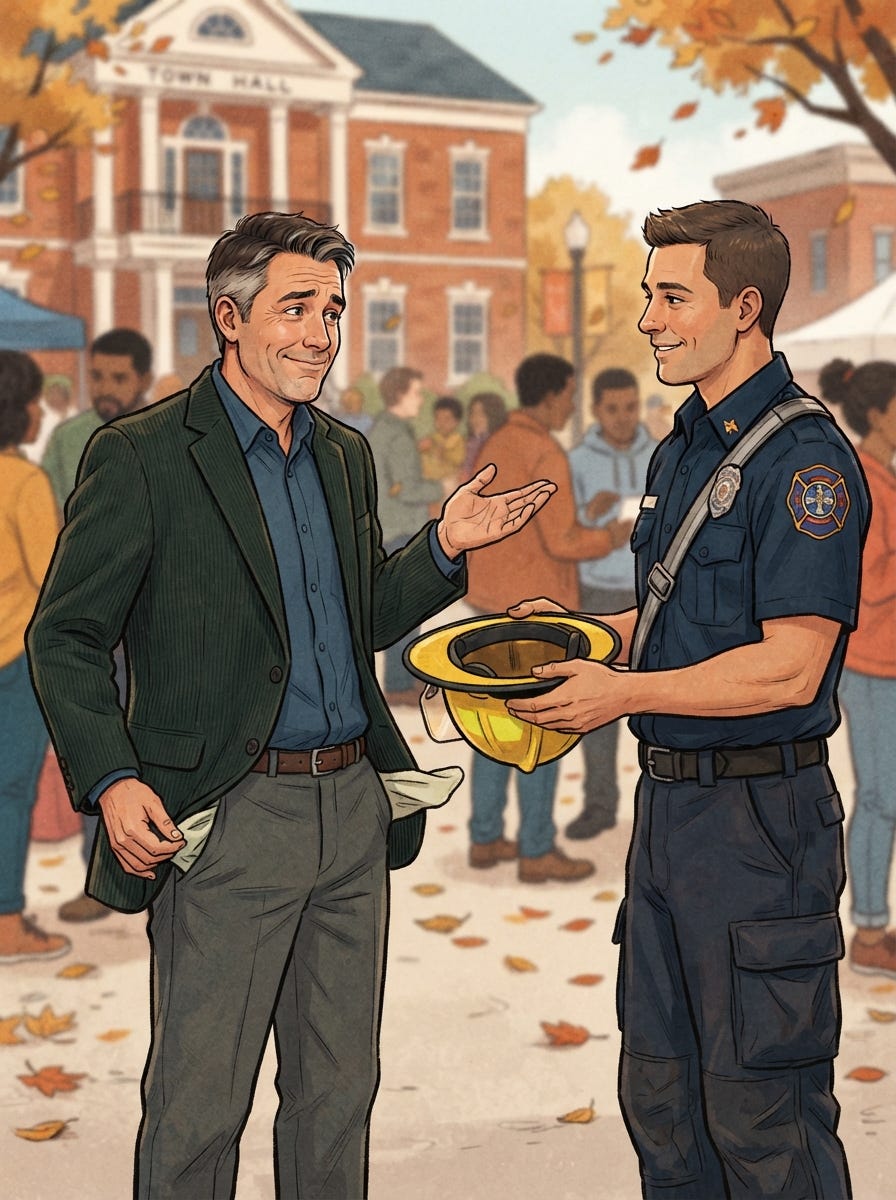
If a community says it values fire and EMS, that value has to become more than applause – it has to become an honest discussion about what level of service the community expects, what the current model can realistically provide, and what it will take to close the gap.
I get that every community can’t immediately hire full-time staffing. I understand that rural communities face real constraints: budgets are tight, and politics are complicated. I know it’s challenging to balance schools, utilities, public works, and emergency services with limited resources and increasing costs – especially under the scrutinizing watch of John Q. Public.
That is why we need to look beyond “career versus volunteer” as the only options. Some communities may need to consider hybrid or daytime staffing, regional partnerships, paid-on-call incentives, professional admins, or county-level funding. There’s no one right solution, but the wrong solution is pretending nothing has changed.
The can of Monster, the fitness class, and the emergency services budget all illustrate the same tendency: we often resist paying for what we need while gladly paying for what we want. The problem is that public safety cannot afford to be built on the same short-sighted psychology that shrugs off exercise.
Communities deserve to know what they can expect for their emergency services dollars. They should demand accountability and measurable outcomes. But that necessitates a discussion about actual cost, not a default to the cheapest solution. An ambulance or fire truck without enough trained people to staff it is a parade piece.
The real price-per-gallon comparison isn’t Monster versus gasoline; the real comparison is what we say we value versus what we are willing to fund. And like fitness, we can choose to pay now, or be forced to pay later.