


Early in my fitness career, I worked for a chain gym that, in hindsight, felt more like a soulless corporation than a place to help people thrive. Their business model was built on hard-selling personal training memberships, and they had a ten-step sales process that we were required to memorize and execute with the enthusiasm of a carnival barker and the precision of a Broadway choreographer.
The script was all about getting you to say “yes.” We’d ask you a series of questions designed to elicit agreement, because, as the psychology goes, the more you say “yes,” the more likely you are to say “yes” when I ask you to sign on the dotted line.
We’d start with your “fitness goal.” If you didn’t have one, we’d fish one out of you. Then we’d ask, “On a scale of 1 to 10, how committed are you to that goal?” If you said anything less than a 10, we’d dig: “Why not?” The idea was to needle you up to a higher number, then use that number against you if you hesitated at the sales pitch. We’d ask how often you could “realistically” come to the gym, nudging you to imagine yourself coming in more often. “Just once a week? You know you can achieve that goal much faster coming in three times per week, right?” (Another “yes” question.) Then, when it was time to close the deal, we’d remind you of that three-times-a-week commitment.
This entire process was built around the idea that everyone needs a fitness goal, something to chase, something to measure. Otherwise, what’s the point of working out, right?
Wrong.
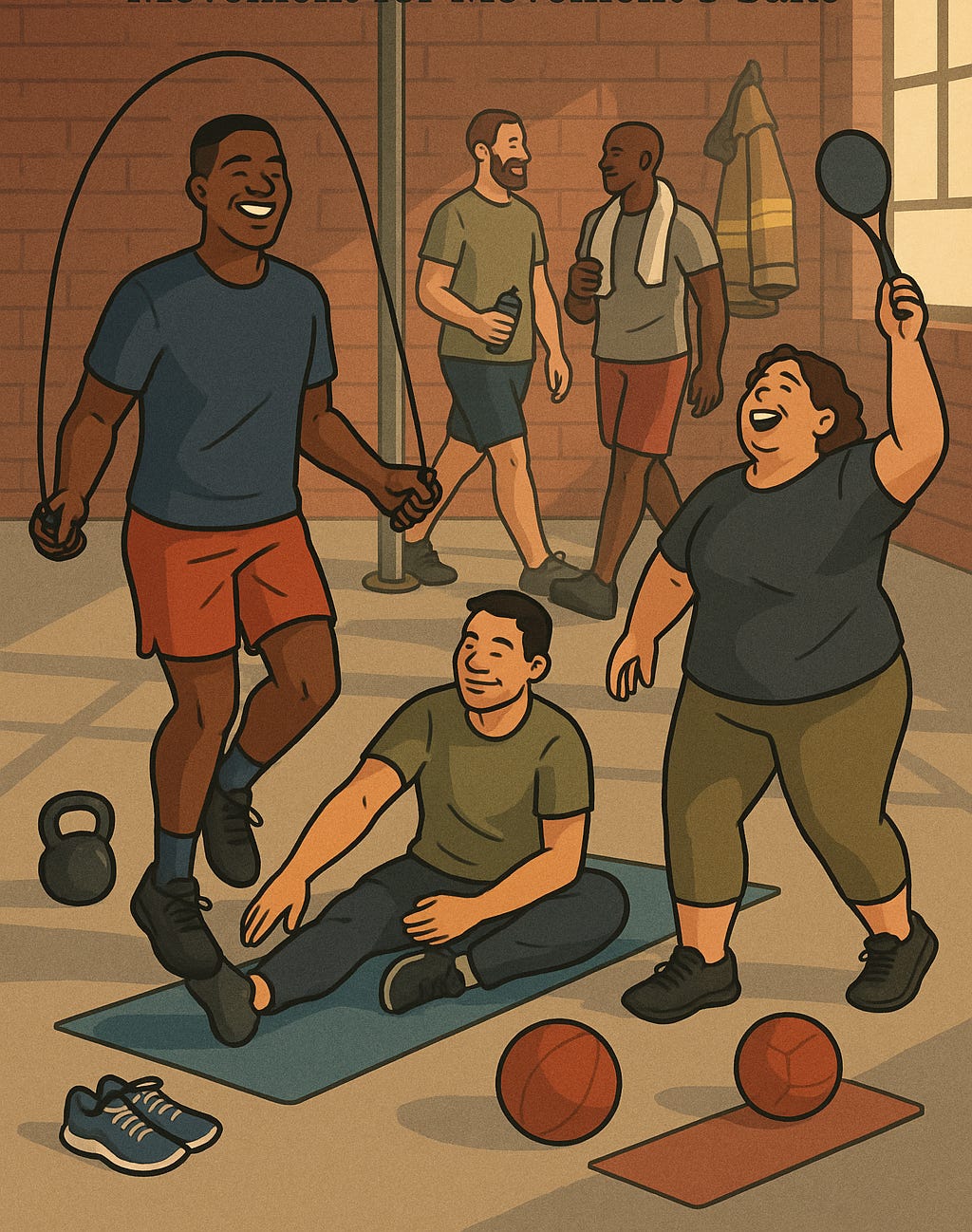
You don’t always have to have a “fitness goal.” Sometimes, your goal can be as simple as enjoying movement for movement’s sake. And there’s nothing wrong with that. In fact, there’s a lot right with it.
Movement Without a Finish Line
At another gym I worked out of, the local muscle heads and gym bros would strut around chanting, “Don’t just work out - train!” But when I pressed them on what that actually meant, most couldn’t give me a clear answer. “Training” implies a finish line, an end result, a competition, a quantifiable target. But for most of these guys, the only goal was “getting bigger.” No competitions, no objective targets, just a vague sense of more.
And you know what? That’s 100% okay. Because, as I’ve learned over the years, it’s perfectly fine not to have a goal. Movement for movement’s sake has value. Think about going for a hike or a walk: most of us don’t do that as a form of transit; we do it for the love of activity, for the way it makes us feel.
Research backs this up. A 2012 review in the International Journal of Behavioral Nutrition and Physical Activity found that people who engaged in physical activity for enjoyment, rather than for a specific outcome, were more likely to stick with it long-term. Intrinsic motivation - the simple pleasure of moving - was a more powerful predictor of consistency than any external goal.
When Goals Matter Most
Of course, there are times when having a specific fitness goal or a structured exercise plan isn’t just helpful, but necessary. Signed up for a powerlifting competition? You probably need a structured plan for that. Training for a marathon? You’ll likely want to follow a program with weekly and monthly goals. Recovering from an injury, managing a chronic medical condition, or working through a rehab program? Targeted movement with clear objectives can be the best medicine. In these cases, according to leading guidelines, goal-oriented, progressive exercise is critical for safe recovery and optimal outcomes.
But even then, the “goal” doesn’t have to be about chasing a number on a scale or a personal best in the gym. Sometimes, it’s about regaining function, reducing pain, or simply being able to do the things you love again. The key is that the plan fits the person, not the other way around.
The Problem With “Goal-Forcing”
As a coach, I’ve learned not to force a goal on someone just to sell them a service. If you come to me because you want to move, that’s enough. Sometimes, the “goal” comes later, inspired by the process itself. For many, the act of showing up is the victory. The rest is just details.
This is especially relevant in the world of emergency services. I see so many “firefighter fitness” influencers pushing the idea that there’s a single right way to train, or that only certain workouts “count” for tactical athletes. The implication is that if you’re not doing their program, you’re wasting your time.
Here’s my take: Don’t turn up your nose at other kinds of fitness activities just because they aren’t specifically designed for tactical or fire athletes. Doing anything is better than doing nothing, especially when the vast majority of us get somewhere between little and no structured exercise.
The CDC reports that only about 23% of American adults get the recommended amount of both aerobic and muscle-strengthening activity each week. That means most of us are doing less than we should, and for many, the biggest barrier is simply getting started.
Lowering the Barrier to Entry
Activities with a low barrier to entry - walking, stretching, bodyweight exercises, even a pickleball game with your crew - can be the gateway to a more active life. If you’re doing nothing, doing something is a massive win. And if you’re already active, mixing it up with different forms of movement can keep things fresh and enjoyable.
Here’s my recommendation: If you’re struggling to find motivation because you don’t have a “goal,” let that go. Move because it feels good. Move because it helps you manage stress, sleep better, and show up more fully in your life and work. Move because you can.
And if you’re a coach, trainer, or influencer, remember: not everyone needs a finish line. Sometimes, the journey is the destination.
Let’s Connect! What’s your favorite way to move, just for the sake of moving? Share it in the comments, or tag me on social media. Let’s celebrate movement in all its forms - no finish line required.