


You’ve been here before.
You used to be in solid shape. Maybe even the fittest in your crew. But somewhere along the way, the workouts got fewer and farther between. Maybe it was an injury, a string of back-to-back shifts, family responsibilities, or just plain burnout.
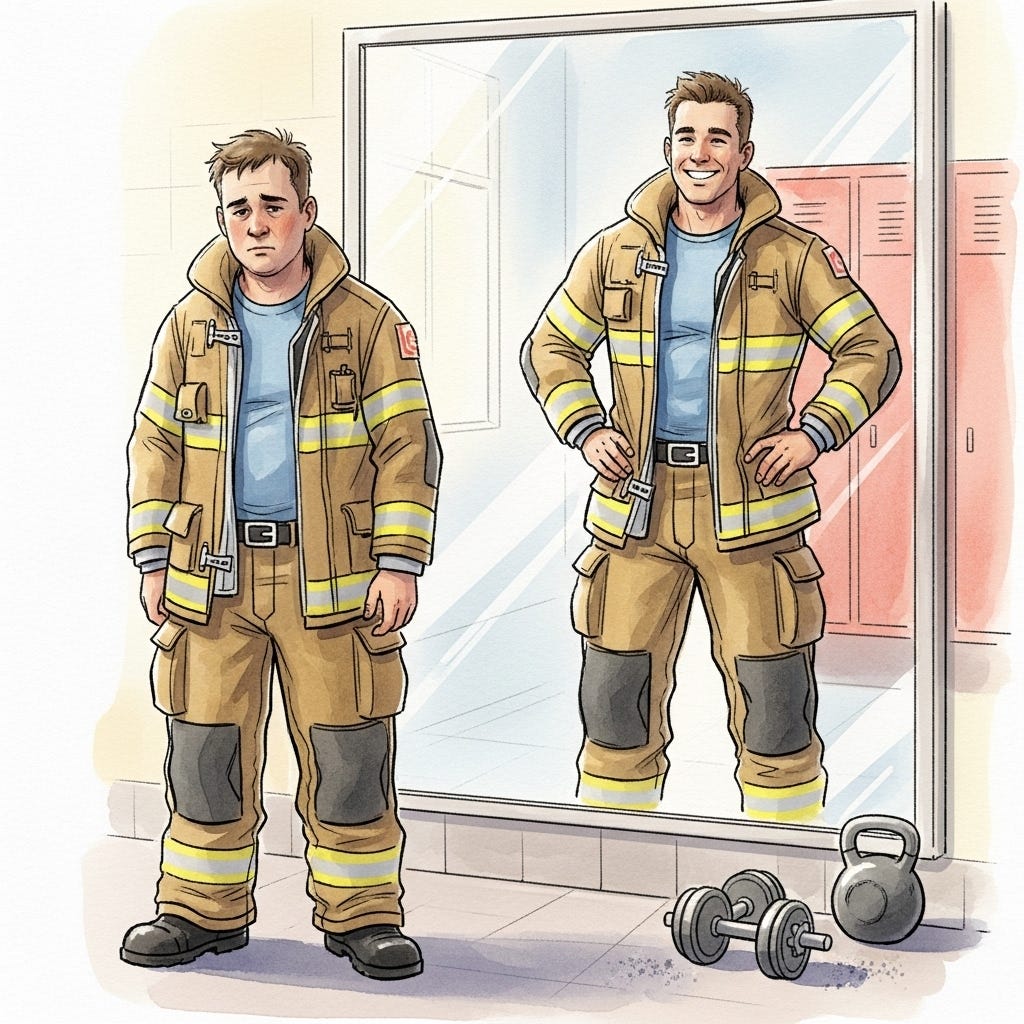
Now you’re looking at the gear you used to throw on without thinking, and you’re wondering if you could still move like you used to. And if you’re being honest, you’re not sure you want to find out.
Can you get back to a place where you feel strong, capable, and ready for whatever the job — and life — throws at you?
The short answer: Absolutely.
The longer answer: Yes... but it’s going to take a smart, patient approach. No crash programs, no “I’ll just push through it” heroics. We’re going to do this the way we’d handle any HazMat incident — with a plan, a pace, and the right tools for the job.
Step 1: Start Where You Are, Not Where You Were
In the fire service, we don’t roll up on a scene and expect it to be the same as the last one. We size it up, note the hazards, and form our action plan based on current and anticipated conditions. Your fitness is no different.
If you’ve been off the wagon for months or years, you’re not going to be moving like you did in your academy days or at your peak, and that’s OK. What’s not OK is pretending you’re still there and trying to train like it. That’s how you end up with a blown knee, a tweaked back, or a shoulder that won’t let you sleep.
Why it matters: After just a few weeks of detraining, cardiovascular fitness and muscular strength begin to decline — and the longer the break, the greater the loss. The good news, though, is that your body also retains a “muscle memory” effect, meaning you can regain lost strength and endurance faster than it took to build them the first time.
“Shift partner” tip: Be honest about your current fitness level. If you used to run 5 miles, start with a short jog or a walk/run. If you used to deadlift 315, start with a weight that feels almost too easy. You’re not going backward — you’re laying a safe, solid foundation for moving forward.
Step 2: Progress With Purpose
Once you’ve sized up your current condition, it’s time to move forward — but with intention. This is not the time for “full-on beast mode.” If you used to train six days a week, aim for two or three. If you used to do hour-long sessions, start with 20 or 30 minutes. Steadily increase duration and effort over time.
Focus on the basics — muscles and movements you use on the job and in life, starting light and building over time:
• Pulling — like hauling hose or pulling yourself up a ladder (think dumbbell rows, band pulls)
• Pushing — like forcing a door or pushing a charged line (think push-ups, overhead presses)
• Squatting & lunging — like climbing stairs or moving patients (think bodyweight squats, step-ups)
• Hinging — like picking up a box or a saw (think deadlifts, hip hinges)
• Carrying — like moving tools or groceries (think farmer’s carries)
Why it matters: Progressive overload (gradually increasing the demands on your body) is the most effective way to build strength and endurance without injury. Jumping back in at full throttle increases your risk of overuse injuries, especially as we age and recovery time gets longer.
“Shift Partner” Tip: Rebuilding your fitness is like taking a hands-on refresher for an expired certification you haven’t used in a while. The refresher class isn’t going to throw you in at the “technician” level right out of the gate. Good instructors walk you back through “awareness” and “operations” levels first, rebuilding those base skills before re-training advanced ones.
Step 3: Think Easy and Enjoyable
The more complicated you make fitness, the easier it is to skip. The key is to make it so simple and enjoyable that it’s hard not to do it. Some ideas:
Pair workouts with something you enjoy. Turn training time into something you look forward to. Listen to a favorite podcast, audiobook, or playlist while you move. For me, picking out a great TV series that I only watch from my stationary bike is a big motivator.
Make It Social. Finding a shift partner, friend, or family member to train with — or at least check in with — can motivate you both and keep you accountable.
Remove barriers. Treat workouts like they’re calls in your first due. Put them in your calendar, set an alarm, whatever you can do to remind yourself. Preplan the night before by laying out your clothes and gear, fully charging your watch or phone, and setting up any equipment where you can grab it fast. The less you have to think about before starting, the more likely you are to follow through.
Why it matters: Reducing “friction” — the small obstacles that make a task harder to start — dramatically increases follow-through. Studies show enjoyment is also a major predictor of long-term exercise adherence: when you make it easy and enjoyable, you make it sustainable.
“Shift partner” tip: Not every workout has to feel like a five-alarm fire. Some days, the win is just showing up and moving, even if you have to dial it back. Think of it like a light drill between big calls: it keeps you sharp, keeps the habit alive, and reminds you that training doesn’t always have to be all-out to be worth it.
“Coach’s Sidebar”: Quick Wins
These “small wins” are signs your body is adapting, your fitness is returning, and you’re building capacity for “the big stuff,” on the job and in life.
Consistency Wins
□ Completing two workouts a week for two weeks in a row.
□ Showing up for a workout even when you didn’t feel like it.
Strength & Endurance Wins
□ Adding one more rep to a bodyweight exercise.
□ Walking or jogging an extra block without feeling winded.
Recovery Wins
□ Feeling less sore after a repeat workout.
□ Sleeping better on training days.
□ Recovering faster between sets or after climbing stairs.
Functional Wins
□ Lifting gear or a patient with less strain.
□ Climbing a flight of stairs in gear without stopping.
Mindset Wins
□ Looking forward to workouts instead of dreading them.
□ Feeling more confident in your ability to get back in shape.
The Long Game
This isn’t about getting back to your 25-year-old self. It’s about building the strength, stamina, and resilience you need for the job you have now and the life you want after the job.
Fitness is a long game. There are no shortcuts. But if you’ve ever made it through a tough shift, a grueling call, or a challenge you didn’t think you could handle, you already know you’ve got what it takes. Trust the process. The work you put in now will pay off on the fireground, at home, and for years to come.